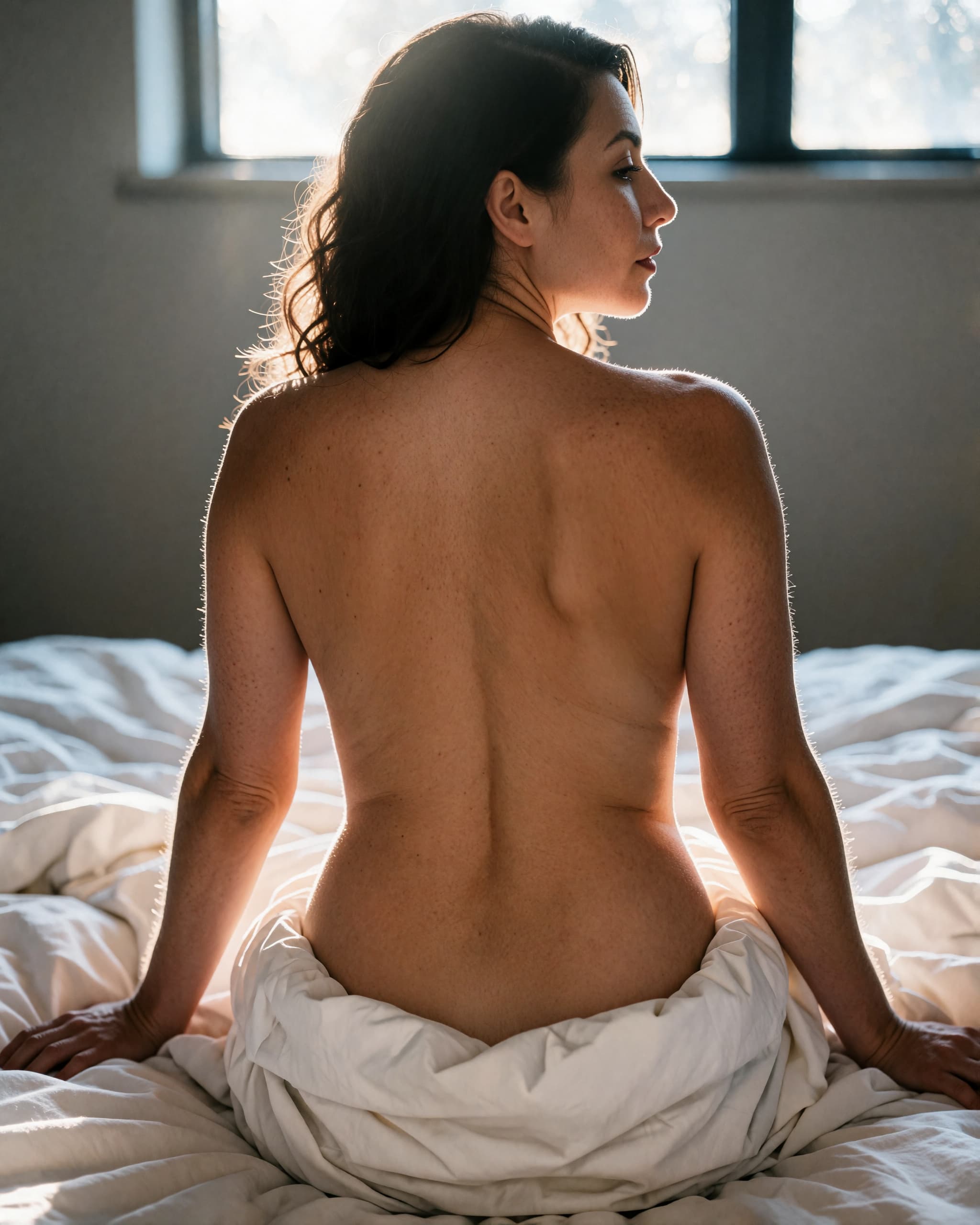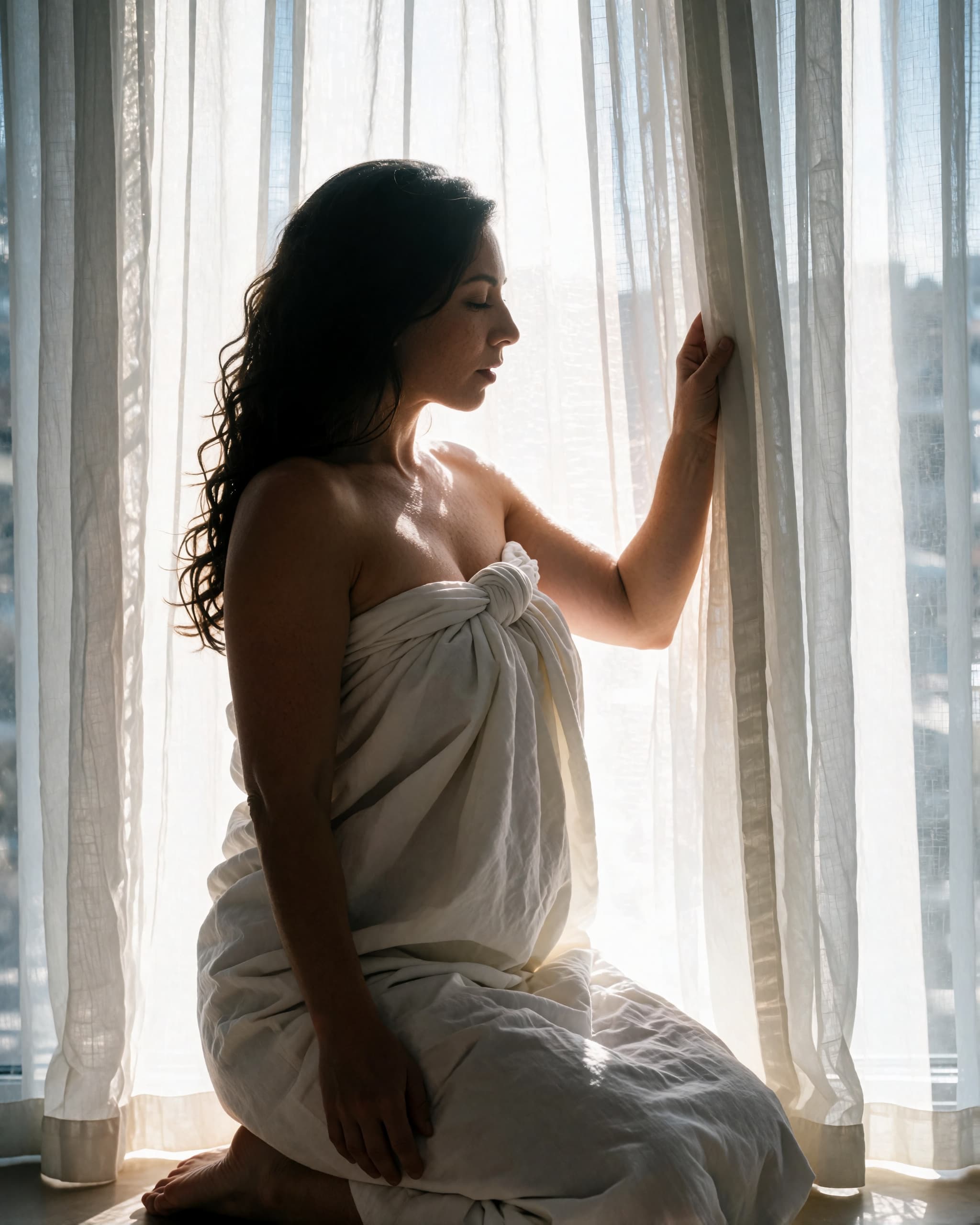
Recreate this look
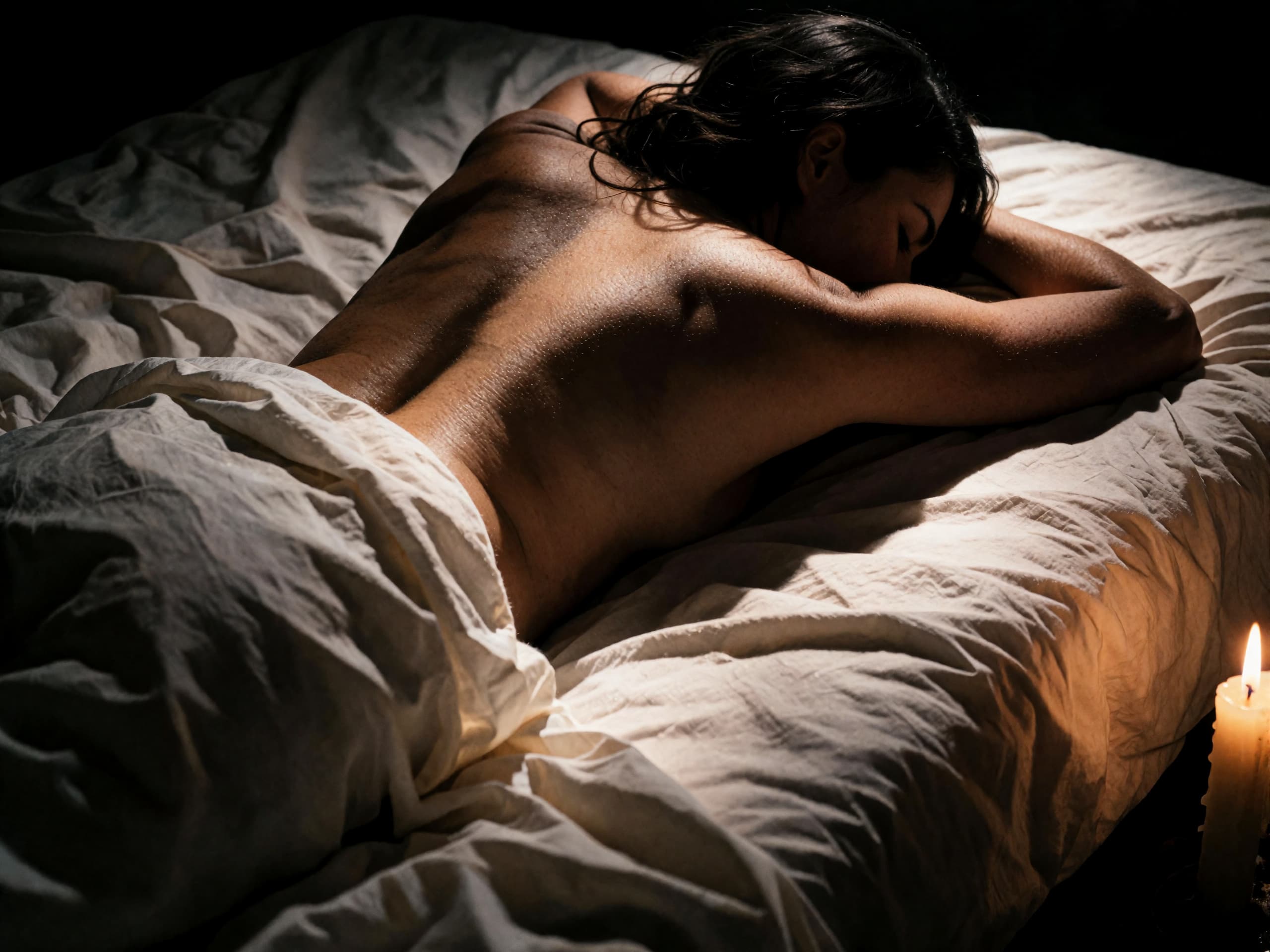
Shadow on the Spine
Lighting
- After dark, and the later the better — this one needs the room genuinely dark, so a winter evening is far easier than a light summer one. Nothing else about the timing matters.
- Cluster several tea-lights or candles just outside the edge of the frame, on one side of you. Cheap tea-lights give exactly this glow; nothing needs to be bought beyond a bag of them.
- Turn the overhead light off, and every other light with it. Candlelight only reads as candlelight when it is the only thing in the room.
- Keep the candles close to you — the light falls away very fast, and a candle across the room does nothing at all. Close enough to feel a little warmth is about right.
- Safety before anything else: candles well away from curtains, bedding and anything loose, the phone and the tripod on dry, steady footing, and nothing left burning when you leave the room.
- Set the exposure — how bright or dark the picture comes out — off a stand-in, not off yourself: you cannot tap your own body from behind the phone. Put a cushion or a folded coat where you will be, tap the screen on its candle-lit side, and let everything else fall into shadow rather than trying to rescue it. The shadow is the mood.
- This is the dimmest light in the library, so the phone will capture slowly. Settle, breathe shallowly, hold still, and take many more frames than you think you need — a few will come out beautifully sharp and those are the ones.
Posing
- Lie face down on the bed with your body running along it rather than across it, so the whole line of you has room in the frame.
- Prop up onto both forearms and lift your chest clear of the bed. Everything in this family depends on that lift: lying flat goes shapeless, propped up lengthens the back.
- Slide your forearms far enough forward that your shoulders sit above your elbows rather than in front of them. That is what stops the shoulders creeping up around your ears.
- Draw your shoulder blades gently together and down your back. It softens the shoulder line, opens the chest and is the difference between a relaxed frame and a scrunched one.
- Stack your hands and rest your chin on the backs of them, or fold your forearms and rest your head on them. Either gives your face somewhere to be and your arms something to do.
- Arrange the sheet before you settle: drawn smoothly across the small of your back, gathered at the waist, or pulled up as far as you like. Smoothing a drape once you are lying on it is close to impossible.
- Cross your ankles behind you and lift your lower legs into the air. It is the most playful thing in this family and it stops the bottom half of the frame from going flat.
- Lengthen your neck forward and out of your shoulders rather than tipping your head back. Pressing the head back closes the throat; reaching it forward opens the whole line.
- Let your hair fall loose to one side, or forward across your face if you would rather it were not recognisable. Face down is a covered, low-pressure family, and how much of your face is in it is entirely your choice.
- Turn your face towards the camera, or away towards the light, and hold whichever you chose for the run.
- Breathe out as the picture is taken and let the smile land on the exhale. This family suits a genuine, easy smile better than a composed one.
- Come down onto the bed and rest your arms between runs. Propping on the forearms tires faster than it feels like it will, and tired arms show in the shoulders.
Coming with free accounts: saving this look to your favourites, dropping it straight into a shoot plan, and pose notes adjusted to your space and comfort level. Until then, the recipe above is the whole thing — print it, or keep it open on your phone. Grab the free checklist and we'll email you the moment accounts open.