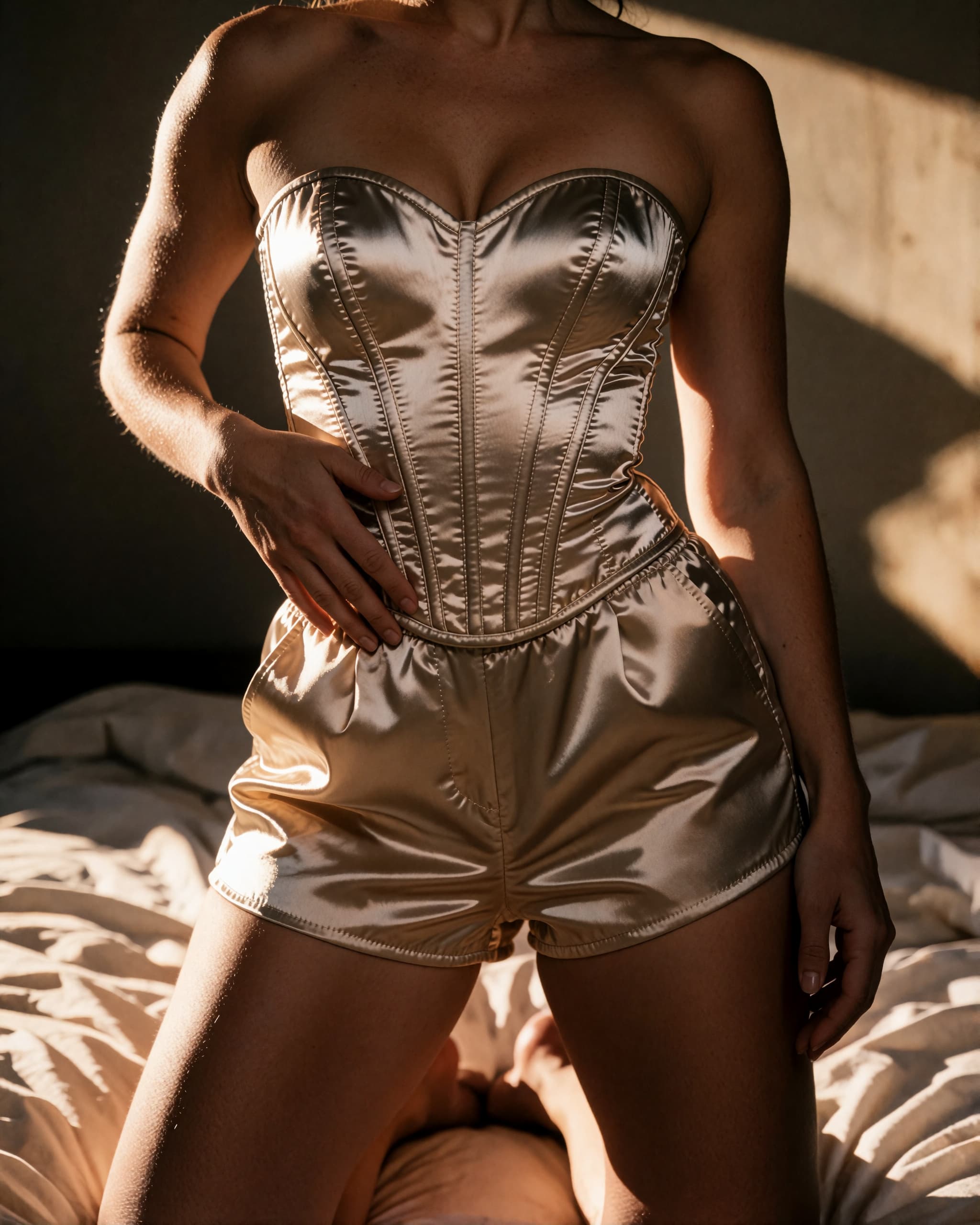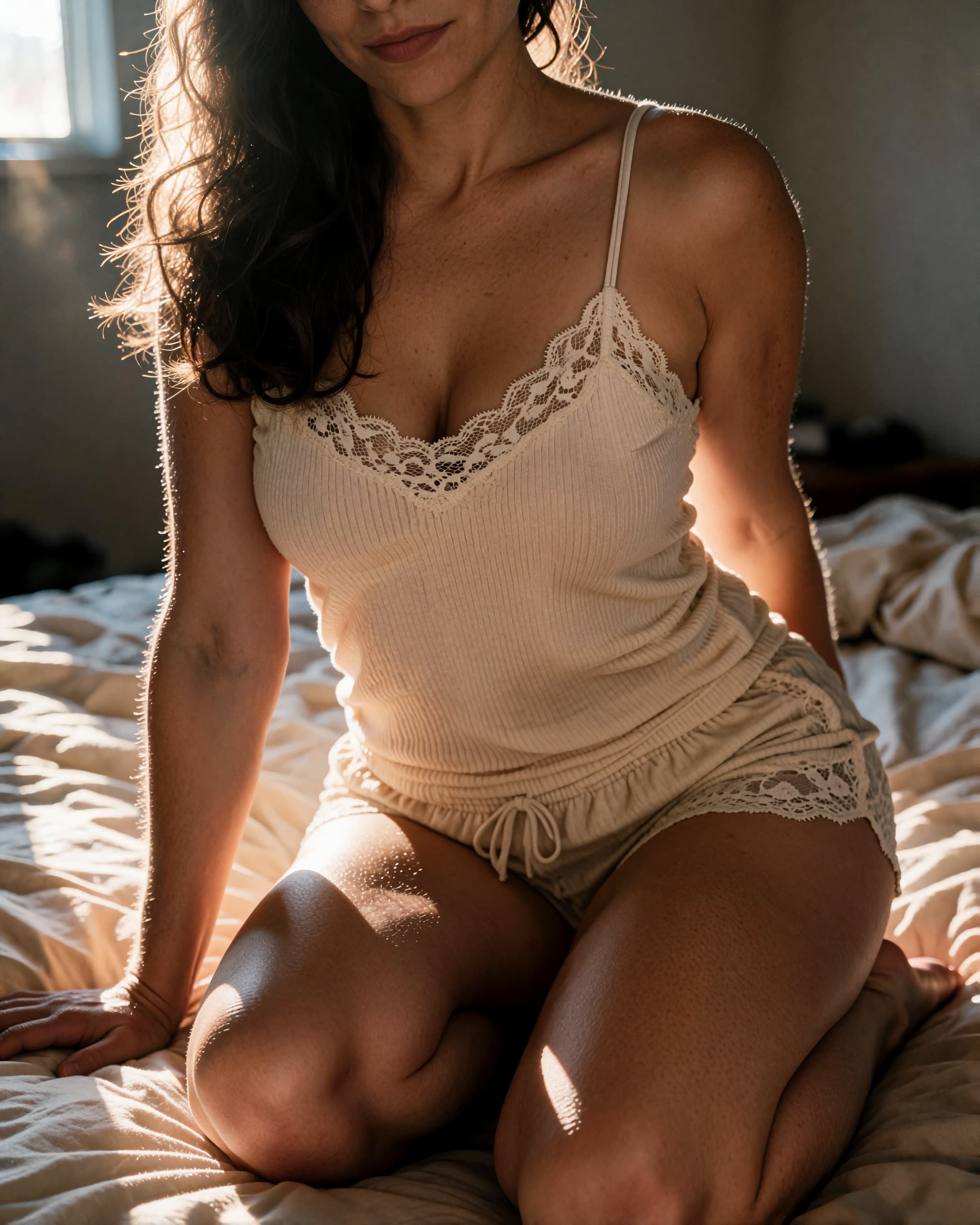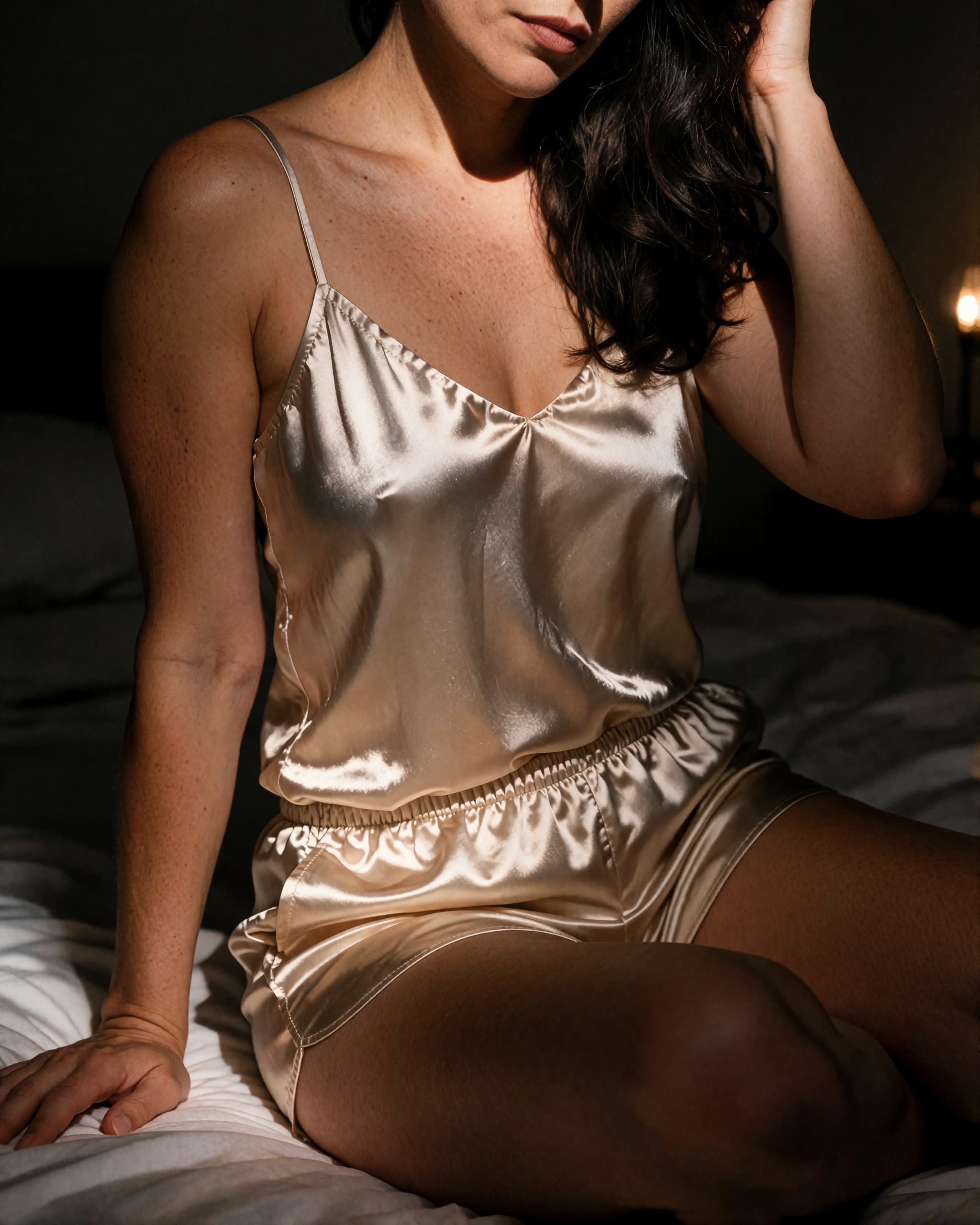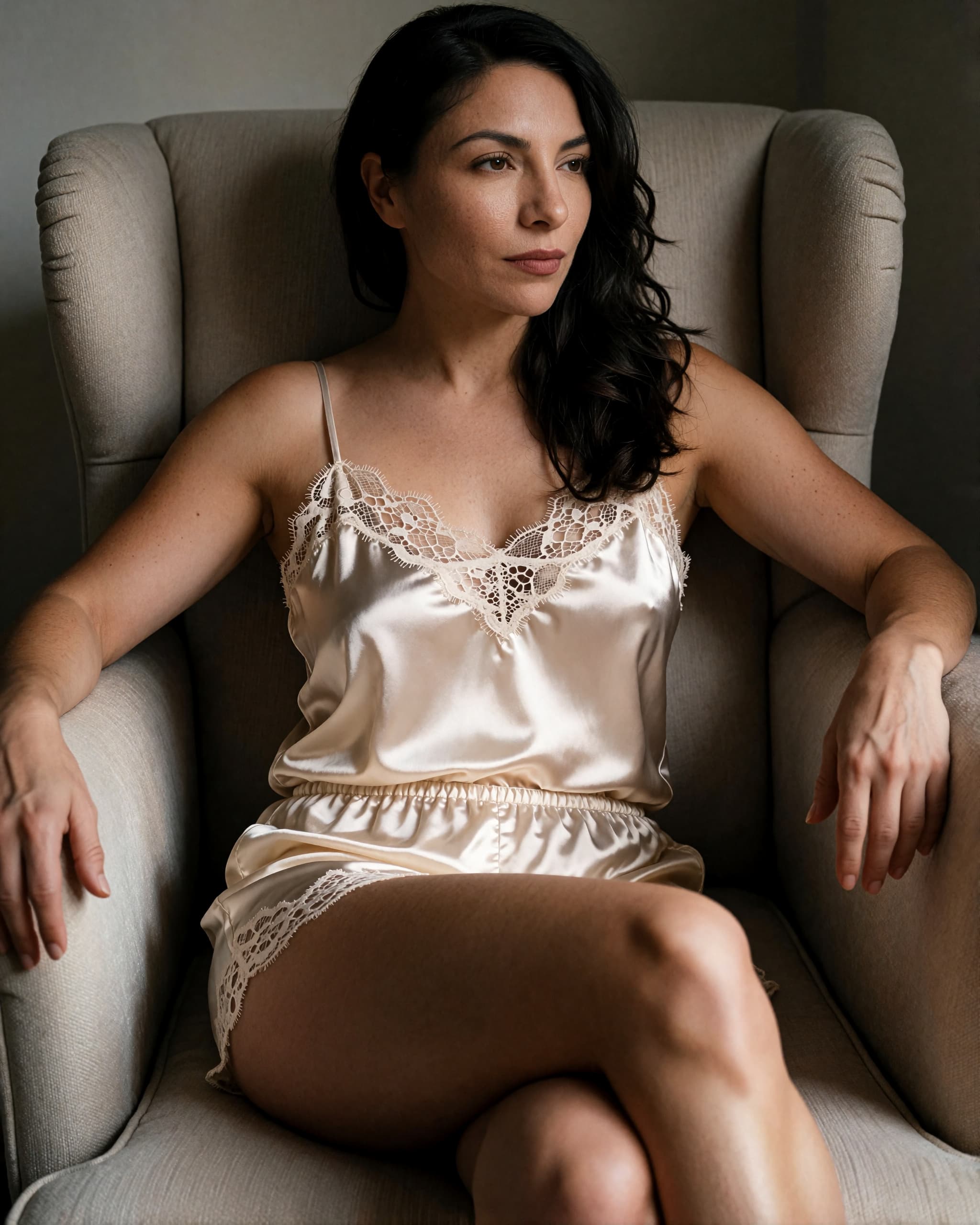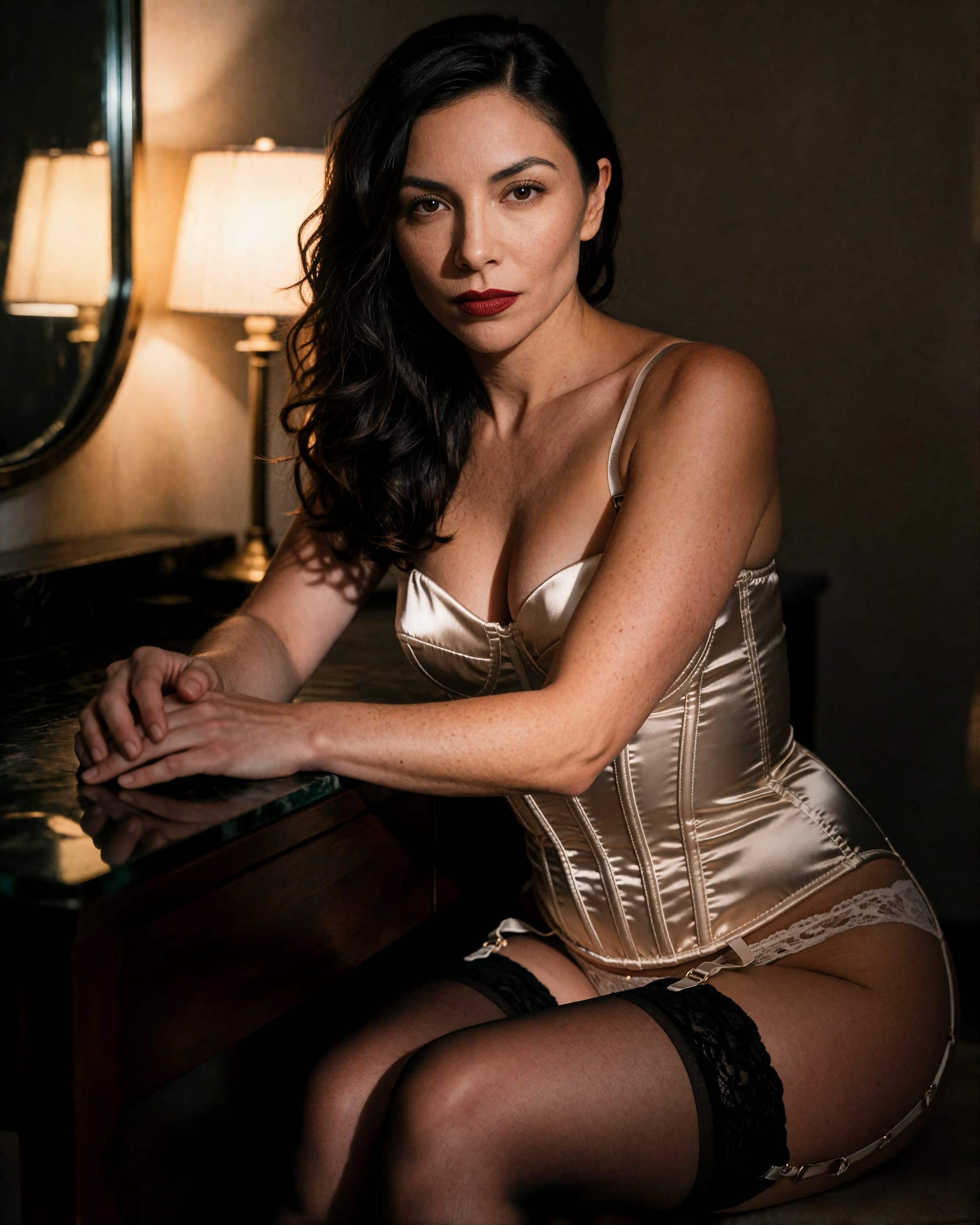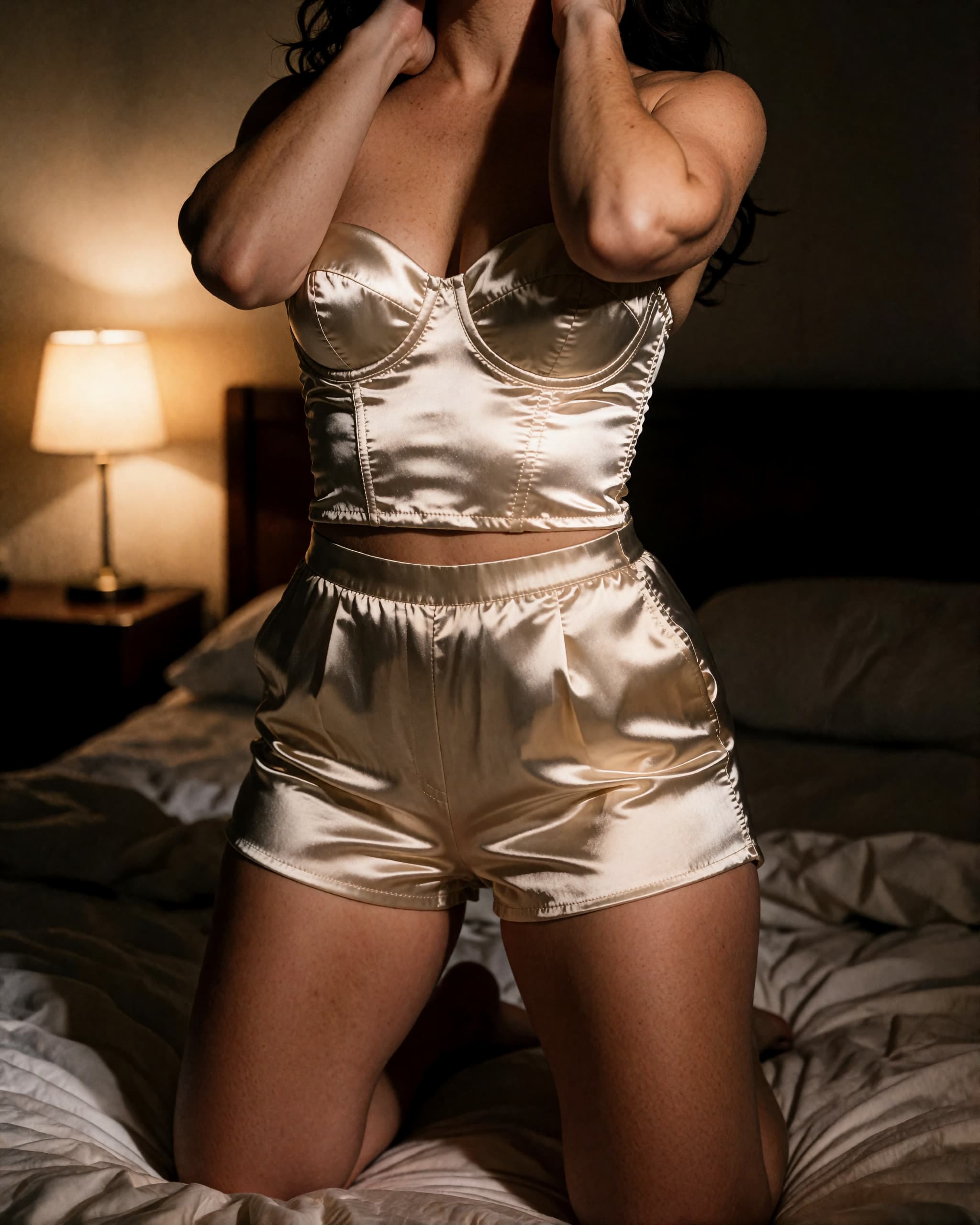
Recreate this look
Arched Kneel
Lighting
- Any time after dark, which makes this the easiest look in the library to plan: no weather to wait for and no hour to catch. Pick an evening when the room will be yours.
- Use one lamp and nothing else. A bedside lamp with a warm bulb and its shade on is exactly right; the overheads go off, and so does everything else in the room.
- Put the lamp low and to one side of you, fairly close, so the light rakes sideways across you rather than falling down onto you. That shallow, sideways angle is what shows texture — lace, skin, the line of a shoulder — and overhead light flattens all of it.
- If the bulb is bare or harsh, clip a white pillowcase or a thin sheet over the shade to soften it, but keep the fabric well clear of a hot bulb.
- Let the far side of you fall into deep shadow and leave it there. A single lamp is meant to light part of you, and trying to fill the other side with a second lamp is what turns this look ordinary.
- Set the exposure — how bright or dark the picture comes out — off a stand-in, not off yourself: you cannot tap your own skin from behind the phone. Stand a cushion or a folded coat where you will be, tap the screen on its lamp-lit part, then ease the slider down a little so the lit skin glows rather than burns out.
- Lamplight is dimmer than it feels, so the phone will capture more slowly than usual. Hold still through the frame and take plenty — some will be sharper than others, and that is normal rather than a fault.
Posing
- Kneel on the bed, and put something soft under your knees if it is not soft already — a folded duvet, a rug doubled over, a spare pillow. Bare knees on a hard surface will end the run long before you have the frame you want.
- Kneel upright first, then sit back only a couple of centimetres towards your heels. Upright but relaxed is the target: sitting all the way down collapses the line, and staying bolt upright looks braced.
- Turn your torso about three-quarters towards the light and away from square-on. A three-quarter turn suits every figure better than facing straight forward, and kneeling is the family where that matters most.
- Roll the hip nearest the camera slightly forward. That small roll is what puts the curve from ribs to hip into the frame, and it is easy to miss because nothing else has to move.
- Let a soft arch come into your lower back and draw your shoulders back and down. Keep the arch gentle — enough to lengthen the front of you, not enough to feel like work.
- Lengthen your spine upward before you do anything else with your arms. Kneeling makes you shorter by definition, so all of the length has to come from the back and the neck.
- Raise at least one hand above waist height — gathering your hair to one side, drawing a robe closed at the front, resting at your collarbone, tracing your waist. A lifted hand opens the shoulder and keeps the elbow off the ribs.
- Rest the other hand somewhere settled: on your thigh, on the bed beside you, holding a hem. Two lifted hands can look posed; one lifted and one resting looks unhurried.
- Decide what your face does — turned to the light in profile, dropped so your hair falls across it, or lifted to the lens — and commit to it for the whole run.
- Take a breath in as the timer counts down and exhale as it fires. Relaxed shoulders make the frame, and kneeling is the position most likely to tighten them.
- Check your knees between runs and shift your weight. This family is comfortable for a couple of minutes and not much more, so shoot in short runs and stand up in between.
Coming with free accounts: saving this look to your favourites, dropping it straight into a shoot plan, and pose notes adjusted to your space and comfort level. Until then, the recipe above is the whole thing — print it, or keep it open on your phone. Grab the free checklist and we'll email you the moment accounts open.